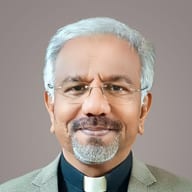
Revd. Dr. D. J. Ajith Kumar

Mission Sunday

“When he saw the crowds, he had compassion for them, because they were harassed and helpless, like sheep without a shepherd. Then he said to his disciples, ‘The harvest is plentiful, but the labourers are…

Readings

OT Isa.58:6-10; Psalm 82; Epistle 1 John 3:16-18; Gospel Matt. 9:35-38

  “When he saw the crowds, he had compassion for them, because they were harassed and helpless, like sheep without a shepherd. Then he said to his disciples, ‘The harvest is plentiful, but the labourers are few.'” (Matthew 9:36–37). Mission Sunday reminds us that the Church exists not merely to gather for worship but to participate in the mission of God. Mission is not an optional programme of the Church; it is the very heartbeat of God. The Church was born through God’s mission and continues to exist for God’s mission. From the call of Abraham to the Great Commission, the Bible reveals a God who seeks, saves, restores, and sends.Yet the driving force behind God’s mission is neither duty nor obligation. It is compassion. Before Jesus preached, healed, or sent His disciples, He first looked at the people with compassion. The Gospel tells us that He saw the crowds “harassed and helpless, like sheep without a shepherd.” Compassion moved Him to action.Today our world resembles the world Jesus saw. Millions struggle with poverty, injustice, loneliness, broken families, addiction, violence, displacement, and spiritual emptiness. Even in our own neighbourhoods, people carry invisible burdens. Mission begins when we see people through the compassionate eyes of Christ.The readings appointed for today beautifully unite around one message: God’s people are called to transform compassion into action. Compassion that remains only a feeling accomplishes little. Biblical compassion always moves the hands, feet, voice, and heart into service.
  1. True Mission Demonstrates Compassion Through Practical Service

The prophet Isaiah challenges a religion that was rich in ritual but poor in mercy. The people fasted faithfully, yet neglected the suffering around them. God declared that the fast He desires is not merely abstaining from food but actively caring for people.Isaiah says,“Is not this the fast that I choose: to loose the bonds of injustice, to undo the straps of the yoke, to let the oppressed go free… to share your bread with the hungry, bring the homeless poor into your house, clothe the naked, and not hide yourself from your own flesh?”This passage teaches us that worship and mission cannot be separated. True worship overflows into compassionate service. We cannot claim to love God while ignoring those whom God loves.Mission is therefore more than preaching sermons. It is feeding the hungry, educating children, caring for the sick, visiting prisoners, comforting the lonely, protecting the vulnerable, advocating for justice, and standing beside those who have no voice. The Church of Christ has always been strongest when it has combined proclamation with compassionate service. Hospitals, schools, orphanages, disaster relief, community development, and social transformation have all grown out of the compassionate mission of God’s people.Isaiah promises that when God’s people live this way, “your light shall break forth like the dawn.” Compassion becomes a testimony. The world sees Christ through the loving actions of His people.Mission is not merely about crossing geographical boundaries. Sometimes our greatest mission field is next door. Every act of kindness becomes a visible expression of God’s invisible love.
  1. True Mission Defends Justice and Upholds Human Dignity

Psalm 82 reminds us that God is deeply concerned about justice. The psalm pictures God standing among earthly rulers and calling them to account for their failure to protect the weak.The psalm commands,“Give justice to the weak and the orphan; maintain the right of the lowly and the destitute. Rescue the weak and the needy.”Mission is never indifferent to injustice. Whenever people are exploited, oppressed, neglected, or forgotten, the Church cannot remain silent. Compassion demands involvement.Throughout Scripture, God consistently identifies Himself with the poor, the widow, the orphan, the stranger, and the marginalized. Therefore, caring for them is not simply humanitarian work; it is participation in God’s own character.In today’s world, injustice appears in many forms: human trafficking, child labour, corruption, domestic violence, discrimination, loneliness among the elderly, neglect of persons with disabilities, and economic inequality. Mission calls believers to become instruments of God’s justice and peace.This does not mean the Church becomes merely a social institution. Rather, the Gospel transforms both hearts and society. Changed hearts produce changed communities.As Christians, we are called not only to pray for justice but also to practice it. Sometimes mission begins with listening to someone who has been ignored. Sometimes it begins with defending someone who cannot defend themselves. Sometimes it means sacrificing our comfort so that another person may experience dignity.Where compassion and justice meet, the Kingdom of God becomes visible.
  1. True Mission Reflects Christ’s Sacrificial Love

The Epistle reminds us of the greatest example of compassion.“We know love by this, that He laid down His life for us – and we ought to lay down our lives for one another.” (1 John 3:16)Christian compassion is rooted in the Cross.Jesus did not simply feel sorry for humanity. He entered our suffering. He carried our sin. He gave Himself completely.John immediately moves from theology to practice.“How does God’s love abide in anyone who has the world’s goods and sees a brother or sister in need and yet refuses help?”Then comes the challenge:“Let us love, not in word or speech, but in truth and action.”Mission therefore requires sacrifice.Sometimes it costs our time.Sometimes our resources.Sometimes our comfort.Sometimes our reputation.Sometimes even our lives.The history of Christian mission is filled with men and women who left the security of home to proclaim Christ in difficult places. Many served among people suffering from disease, famine, persecution, and poverty because they believed Christ’s love compelled them.Not everyone is called to cross oceans, but everyone is called to cross the street.Every believer has a mission field.Parents minister to children.Teachers influence students.Doctors care for patients.Businesspeople witness through integrity.Retired people pray, encourage, mentor, and serve.Young people become ambassadors for Christ among their friends.Mission belongs to the whole Church, not only to pastors or missionaries.
  1. True Mission Begins with Seeing People Through the Eyes of Jesus

The Gospel provides the foundation for today’s theme.Jesus travelled through towns and villages teaching, preaching, and healing. But before He acted, He looked.“When He saw the crowds, He had compassion for them.”Everything changed because Jesus saw differently.Others saw problems.Jesus saw people.Others saw crowds.Jesus saw individuals.Others saw inconvenience.Jesus saw opportunity.His compassion produced action.Then Jesus turned to His disciples and declared,“The harvest is plentiful, but the labourers are few.”Notice that Jesus did not say the harvest was small. The problem was never the harvest. The problem was the shortage of workers.That challenge remains before the Church today.The world has no shortage of needs.There is a shortage of compassionate disciples willing to respond.Jesus therefore instructed His followers to pray that the Lord of the harvest would send labourers into His harvest.Mission always begins in prayer.Prayer prepares our hearts.Prayer opens our eyes.Prayer aligns our priorities with God’s mission.Prayer also sends us.The answer to our prayer may be ourselves.God still calls ordinary believers to become extraordinary instruments of His compassion.The Church does not exist merely to preserve traditions but to participate in God’s redemptive work in the world.Our mission is holistic.We proclaim the Gospel.We serve the needy.We defend justice.We heal relationships.We make disciples.We become the hands and feet of Christ.

Conclusion

Mission Sunday reminds us that compassion is not merely an emotion – it is a way of life. Compassion that does not act remains incomplete.Isaiah calls us to serve the oppressed.The Psalm calls us to defend justice.John calls us to love sacrificially.Jesus calls us to see the crowds with compassionate eyes and enter the plentiful harvest.The greatest missionary was Jesus Himself. He left the glory of heaven, entered our broken world, touched the untouchable, welcomed the rejected, healed the sick, forgave sinners, died on the Cross, and rose again so that humanity might have life.Now He entrusts that same mission to His Church.Mission is not only for those who travel to distant lands. It is for every believer who is willing to reflect the compassion of Christ wherever God has placed them.As we celebrate Mission Sunday, let us ask ourselves:Do we merely notice people’s suffering, or are we moved to compassionate action?Do we pray for labourers while refusing to become one ourselves?Do our neighbours experience the love of Christ through our lives?May the Holy Spirit fill our hearts with the compassion of Christ, strengthen our hands for service, open our eyes to the needs around us, and send us joyfully into God’s harvest field.Then our mission will become more than words. It will become compassion in action, bringing hope to the hurting, justice to the oppressed, and the saving love of Jesus Christ to the world.

Amen.

 
← Sermons Download PDF Share